

April 6, 2026 ⏱️ 8 min
By Andrei N. (RnD Group)
Software development is no longer only about writing code.
More and more, it is about defining intent, guiding AI systems, and staying in control of the outcomes they produce. This shift is already changing how software is built and how the developer’s role is evolving.
In this article, we are going to explore what this transition means, the development paradigms that are shaping it, and also the risks of losing control if AI is used without enough experience and oversight.
The Context
In this landscape, powered by AI increasingly, instead of being only builders, developers are becoming decision-makers and orchestrators of intelligent systems.
When it comes to software development and the usage of AI, three distinct paradigms are emerging:
- Assisted development
- Intent-driven (vibe) development
- Agentic development
Each of these represents a different way of working with AI, and more importantly, a different balance between control and autonomy.
Next, we are going to dive into these three concepts to see how they impact software development.
Assisted Development
Assisted development is the most familiar and already a widely adopted form of AI in software engineering today.
If we were to make a comparison with something practical, it is very similar to working alongside a highly efficient colleague, one that is always available, extremely fast, and capable of suggesting solutions instantly. However, just like in any good collaboration, the responsibility remains on the developer.

Tools such as GitHub Copilot, Claude Code, Cursor or Tabnine, integrate directly into the development environment and provide real-time assistance. They can suggest entire functions, generate repetitive code, or even help with understanding unfamiliar logic.
In practice, this means that a developer can focus less on writing boilerplate code and more on solving actual problems. For example, a simple comment describing a function can be enough for the AI to generate an initial implementation. Similarly, when writing tests or refactoring code, AI can provide a strong starting point, reducing the time needed for routine tasks.
However, it is important to understand what this paradigm of Assisted Development does not change. Thus, the developer still masters:
- Architecture
- The business logic
- The correctness of the solution
In this context, AI does not replace decision-making. It just accelerates execution, and this is why assisted development fits naturally into existing development processes. Code reviews, testing, and architectural discussions remain just as important as before. The difference is that developers can move faster and focus on higher-value activities.
At the same time, this model has its limits. AI assistants operate mostly within a local context and do not fully understand the entire system. They cannot make architectural decisions, nor can they take responsibility for complex flows.
In essence, assisted development is about enhancing the developer. It is just a controlled acceleration of the development process.
Intent-Driven Development (Vibe Coding)
While assisted development keeps the developer in control of the implementation, this paradigm takes a step further.
It is simply about stopping writing code and starting to describe what we want to achieve.
Intent-driven development, sometimes referred to as “vibe coding”, shifts the focus from implementation details to outcomes. Instead of building systems step by step, developers define their intent, and AI generates the corresponding solution.
Using tools like Replit, Lovable, even GitHub Copilot, Claude Code, or Codex, it is now possible to go from an idea to a working prototype in a matter of minutes.
For example, a developer might start with a simple request such as:
“Build a dashboard with filtering, charts, and export functionality.” Based on this, the AI can generate:
- User interface components
- Backend endpoints
- Data models
The developer then iterates on top of this result, refining behavior, adjusting edge cases, and integrating with existing systems.
This approach dramatically increases speed, especially in the early stages of development. It lowers the barrier to entry and allows teams to experiment and validate ideas much faster than before.
However, this speed comes with trade-offs, because as abstraction increases, visibility decreases. Developers may not fully understand the generated code (sometimes they do not understand it at all), and architectural consistency can become difficult to maintain. Over time, this can lead to fragile systems and accumulated technical debt.
Because of this, intent-driven development is best suited for:
- Prototyping
- Experimentation
It is a powerful approach, but one that requires discipline when transitioning toward production systems.
Agentic Development
The most significant shift appears when AI moves beyond assisting or generating and starts acting independently. Agentic software development introduces systems that can execute tasks on behalf of developers. These systems do not simply respond to prompts – they operate with a level of autonomy!
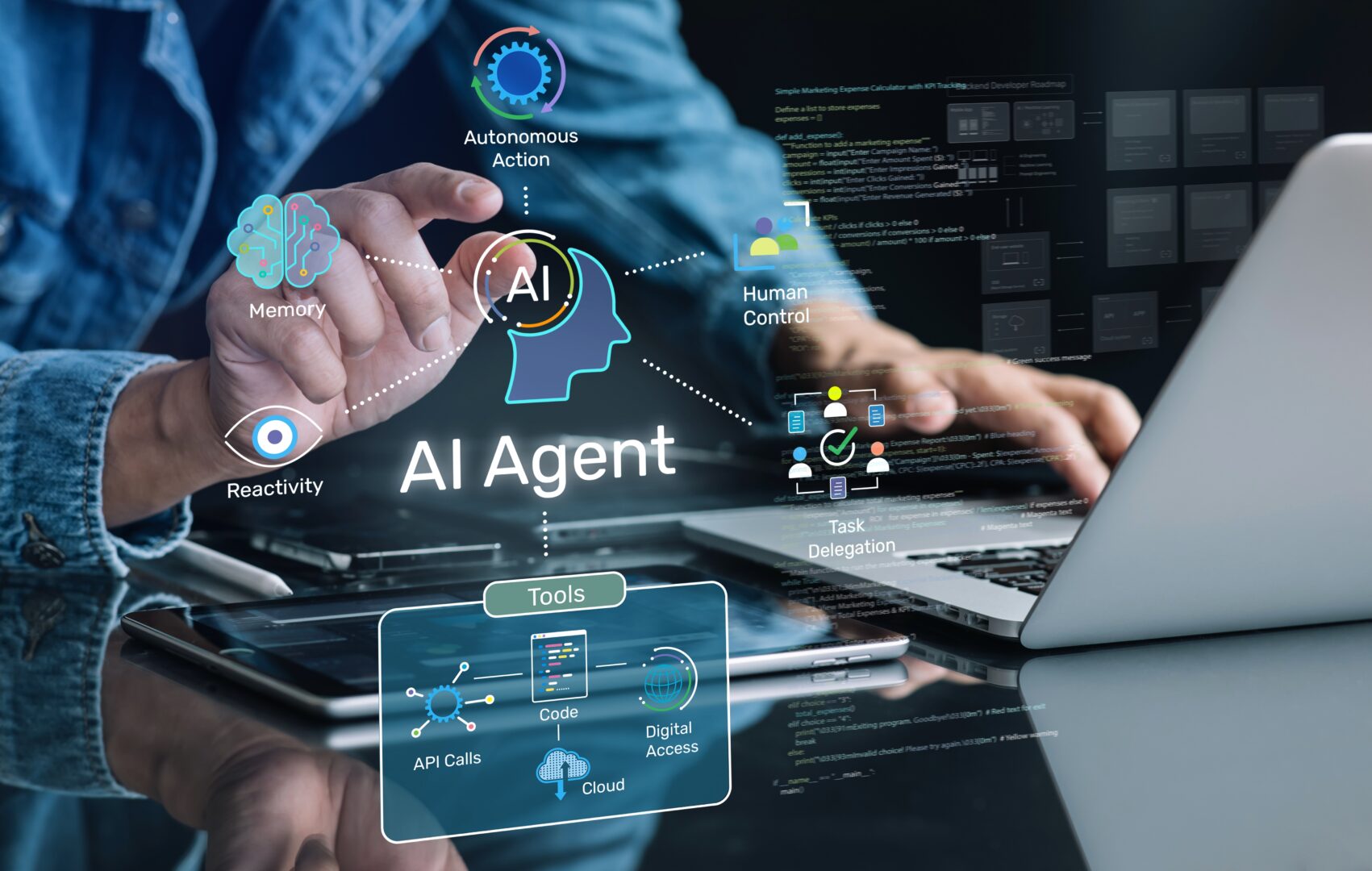
An agentic system can:
- Understand goals
- Plan the necessary steps
- Execute tasks
- Evaluate results
- Iterate until the objective is achieved
To better understand this, it helps to compare it with traditional automation. A CI/CD pipeline, such as GitHub Actions, executes predefined steps when triggered. It follows instructions exactly as they were defined. An agentic system, on the other hand, can decide what needs to be done. For example, instead of just running tests, it can analyze failures, modify the code, and rerun the pipeline until the issue is resolved.
This is a fundamental difference: automation executes; agentic systems decide and adapt.
The role of context
The foundation of agentic systems is context. AI systems do not inherently understand architecture, coding standards, or business rules. Without specific and targeted guidance, they can generate solutions that might be technically correct, even scalable and robust, but misaligned with your system.
This is why modern approaches emphasize providing structured context to agents. This can include:
- Architecture documentation
- Coding guidelines
- Repository-level instructions
- Reference implementations
In platforms like GitHub, this is already taking shape through mechanisms such as repository-level instruction files that guide how AI should behave.
With proper context, agents become significantly more reliable and aligned with the system they operate in. Without it, they remain powerful but unpredictable.
The Agentic Stack (how everything comes together)
Agentic development is often misunderstood as a single tool or a smarter assistant. In fact, it is a composition of multiple layers, each layer being responsible for a different aspect of the system.
To better understand this, it helps to think of an agentic system not as a tool, but as a mini software organization, or just like a real team, where:
- Someone decides what needs to be done
- Someone executes the work
- A system validates the results
- Somebody manages build and deployment procedures
In an agentic system, these roles are implemented through distinct layers.
At the top, there is the orchestration layer, powered by frameworks like LangChain, Microsoft Semantic Kernel, and lately tools like GitHub Copilot and Claude Code, which are evolving as we speak from assistants into multi-agent orchestration platforms.
This layer acts as the “brain” of the system: it takes a goal, breaks it down into smaller tasks, and decides what actions should be performed next.
Below it, the execution layer interacts directly with the real world. Tools such as OpenAI Codex or Cursor can read files, modify code, and run commands. This is where actual code changes happen.
Supporting this, we have validation and feedback systems, such as GitHub Actions or GitLab CI/CD. These systems do not make decisions, but they are essential for ensuring that what was done is correct. They run tests, build applications, and provide feedback that the agent can use to adjust its behavior.
Finally, at the core of everything are the reasoning models, such as GPT-4 or Claude. These provide the intelligence needed to understand tasks, generate solutions, and make decisions.
If we put all these together, the flow looks like this:
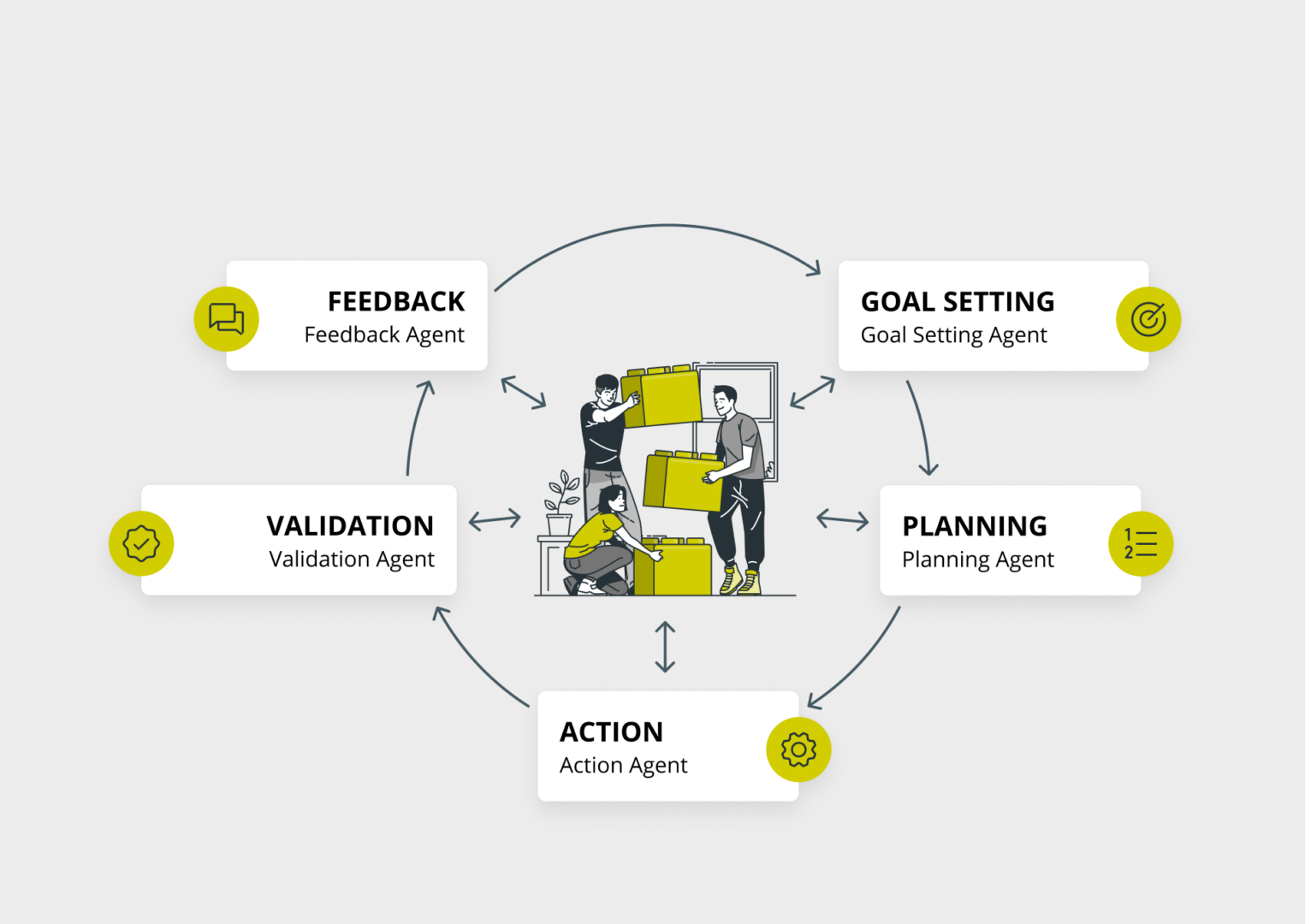
This loop is what transforms a static system into an adaptive one. Together, these layers form systems capable of not just assisting developers but acting on their behalf in a controlled and iterative way.
Challenges and Considerations
Despite its potential, agentic development introduces new challenges. Systems become more complex, and debugging is no longer limited to code, but extends to decision-making processes. Ensuring reliability requires strong governance, clear constraints, and continuous monitoring.
Therefore, adopting AI in software development, especially the agentic paradigm, does not reduce the need for experienced engineers – it amplifies it. The more autonomy is delegated to AI, the more critical it becomes to have highly skilled and trained developers who truly understand what is being generated, how systems are orchestrated, and how agents can be controlled. Without this level of expertise, the risk is not just some incorrect code, but loss of control over the entire system: inconsistent architecture, hidden errors, and unpredictable behavior. AI accelerates development, but only in the hands of engineers who can guide it, constrain it, and take responsibility for its output.
There is also an important aspect of trust. Autonomous systems must prove their reliability over time before they can be fully adopted in critical workflows. For this reason, agentic development should be introduced gradually, starting with well-defined and controlled scenarios.
Bottom Line
It is important to understand that the three paradigms explained in this article (Assisted, Vibe, Agentic) are not competing approaches, but complementary. Each one has its own role:
- Assisted development improves productivity within existing workflows.
- Vibe (Intent-driven) development accelerates exploration and prototyping.
- Agentic development enables automation at scale.
The most effective teams will combine all three, using each where it provides the most value.
Therefore, software development is undergoing a fundamental transformation. It is no longer only about writing code. It is about defining intent, controlling systems, and orchestrating intelligent workflows, while developers are evolving from builders into:
- Designers of systems
- Decision-makers
- Orchestrators of AI-driven processes
The shift is simple, but profound: from code to control.
Îndemnul nostru
Efortul pus în programele pentru studenți completează teoria din facultate cu practica care “ne omoară”. Profitați de ocazie, participând la cât mai multe evenimente!
În cei 3 ani am lucrat la proiecte diverse ce au contribuit decisiv la evoluția mea profesională. Am colaborat strâns cu echipe remarcabile, a căror dedicare și sprijin au fost fundamentale în buna dezvoltare a lucrurilor. Cu fiecare proiect, am învățat nu doar aspecte tehnice, ci și abilități esențiale de comunicare și colaborare, reflectate în experiența mea privind interacțiunile cu clienți și modul în care o echipă eficientă operează. Aceasta este cultura companiei, de la ritmul uneori alert al zilei de lucru și practicile Agile, până la momentele relaxante de socializare cu colegii în pauzele de cafea și activități recreative precum darts și ping pong.

Am făcut cunoștință cu echipa NetRom prin intermediul programelor Internship și NetRom Software Academy, in care am descoperit că noțiunile învățate acasă au totuși aplicabilitate, chiar în cadrul unor aplicații reale. Acele experentie m-au convins să aplic pentru un job.
Mentorii foarte deschiși și colegii cu experiență care mi-au răspuns prompt la toate neclaritățile au transformat provocările în task-uri rezolvate cu succes împreună. Făcând parte din #teamnetrom mi-am depășit frica de a greși și am evoluat într-un mod echilibrat pentru mine.

Am aflat de programele NetRom de la o prezentare organizată în facultate de companie. Am decis să mă înscriu la Summer Camp din dorința de a înțelege ce anume ar presupune o cariera în IT. În urma acestui stagiu de practică, am reușit să dezvolt propria aplicație cu ajutorul mentorilor care mi-au oferit informații teoretice, dar mai ales practice, pe care nu aș fi putut sa le găsesc într-un tutorial aleatoriu de pe internet. Modul meu de abordare a aplicaților s-a schimbat odată ce am înțeles în ce constă mai exact procesul, ce presupune un mediu real de lucru și importanța muncii în echipă.

NetRom Software Testing Academy a fost punctul de plecare pentru o carieră pentru mine. Pe parcursul sesiunilor am avut oportunitatea să cunosc bazele necesare pentru asigurarea calității unui produs, urmate de o zi în companie unde am văzut teoria pusă în practică.
Recomand tuturor celor care își doresc o carieră în QA să ia în considerare această academie, fiind destinată atât celor din domeniu, dar nu numai.

Am descoperit NetRom prin intermediul unui program de internship și am fost impresionată încă de la început de mediul de lucru plăcut, de susținerea și angajamentul colegilor. A fost o oportunitate deosebită de a lucra într-o echipă de proiect, cu roluri specifice, și de a înțelege mai bine cultura companiei. Întreaga perioadă s-a dovedit o experiență valoroasă, atât din punct de vedere al cunoștințelor acumulate, cât și prin prisma relațiilor dezvoltate. În momentul în care mi s-a propus să continui ca angajat permanent, a fost o decizie ușor de luat, bucuroasă fiind să pot aplica cele învățate, dar și să adaug cunoștințe noi în fiecare zi.
